Seminole's Rural Boundary Fight Left Tallahassee. Now It's Back Home.
A statewide bid to weaken Seminole County's rural boundary died in Tallahassee. Now the fight returns home — starting with 67 acres of the old Pappy's Patch.

"Correction (July 13, 2026): An earlier version stated that county planning staff had recommended denial of the Strawberry Lane application. The application was submitted this week and is under staff review; no recommendation has been made. We regret the error."
For two decades, the fight over Seminole County's rural boundary was a local one — settled at the ballot box, at the County Commission, and in court, where the county won every time. This spring it briefly moved somewhere the county couldn't control the outcome: the Florida Legislature. That effort failed on the session's final day. So the decision now sits back where it started — on the local docket — with a live application to remove part of the former Pappy's Patch from the boundary. Here is how we got here, and what is still on the table.
What the rural boundary is
Seminole County voters codified the rural boundary in the County Charter in 2004, giving it the force of a local constitution. It draws a line between land open to dense suburban growth and land the county has committed to keeping rural, and it requires a supermajority of commissioners to remove property from the designation. The boundary has now survived three lawsuits. Notably, the county maintains that the boundary does not ban development inside the line at all — properties there can still be built under their existing land-use and zoning designations, which have been in place since the early 1990s.
What's on the table now
With the statewide effort dead, the immediate decision returns to the Seminole County Commission, and the test case is a proposal called Valhalla Harvest Market. Filed under the entity Strawberry Lane LLC, it asks to remove roughly 67 acres of the former Pappy's Patch strawberry farm, off Florida Avenue, from the rural boundary and to change the comprehensive plan's density rules for the site.
The proposal pairs a 45-acre residential subdivision of 81 single-family homes with a 22-acre "agri-tourism" area — a working farm, an event center, and a butterfly garden. The application was submitted this week and is now under review by Seminole County planning staff, who have not made a recommendation to the Board of County Commissioners. Every application is reviewed against the applicable policies and regulations before staff recommends a course of action or the board takes up the matter. Even at this early stage, it is shaping up as a real test of how firmly the Black Hammock's protected border holds.
The detour through Tallahassee
The reason this reached the state capitol at all traces to an opinion issued in November, when the Florida Attorney General's office questioned whether the boundary's supermajority requirement is constitutional — suggesting the blanket restrictions on rural landowners in Seminole and Orange counties "could very well constitute a regulatory taking" and may violate Florida's Bert Harris Act.
That opinion became the basis for a proposed amendment to Senate Bill 208, filed by Sen. Jonathan Martin of the Fort Myers area. As reported by Oviedo Community News, the amendment would have declared voter-approved rural boundaries a "taking" of development rights and created an automatic process for landowners to be paid the difference in value between their land's current use and what neighboring properties are allowed to build. Legal observers quoted by OCN, including Stetson law professor Paul Boudreaux, noted the language was broad enough to reach beyond Central Florida — potentially to Sarasota and Miami-Dade counties as well — and called it "more significant than the bill it would amend."
The amendment failed on the final day of the 2026 legislative session and did not become law, leaving the boundary's supermajority rule intact and the decision squarely local. The constitutional question it raised, however, did not disappear with it, and could return in a future session or in court.
The case for a change
The property-rights argument is straightforward and has real legal footing behind it. If the state's own attorney general believes the supermajority rule imposes an unconstitutional burden on rural landowners, then those owners are, in this view, bearing a disproportionate cost for a public benefit without compensation.
State Sen. Jason Brodeur, who supported the amendment, framed his position as an attempt to preserve the boundary rather than destroy it. In comments reported by OCN, he said he worried the AG's opinion could result in the entire line being struck down in court, and that providing "a mechanism for the aggrieved" might be what saves it: "The line is politically popular but constitutional rights are more important."
Developer Chris Dorworth, a former state representative who has twice looked at building beyond the boundary, has argued that requiring landowners to seek government permission amounts to "communal decision making, not property rights based decision making." Dorworth has said any attempt to withdraw land from the boundary is "totally futile" under current rules.
The case against
County officials and boundary supporters argue that weakening the line would erode it inward, mile by mile, by tying each rural parcel's allowed density to whatever its neighbors can build. Seminole County drafted a formal response disputing the legal basis of the AG's opinion and stressing that development is already permitted inside the boundary.
The opposition crossed party and chamber lines. State Rep. David Smith, who represents Winter Springs, said he was "aggressively working to have the House reject the Senate amendment language," warning of "catastrophic negative impacts to Seminole County." Commissioner Lee Constantine put it bluntly to OCN: "I would fall on my sword to fight this, because that's what the people of Seminole County want."
Where the developer fits in
Dorworth's connection to the legislative effort is one of the questions OCN has pressed. Through public-records requests, OCN reported that Dorworth had messaged multiple county commissioners urging support for the amendment, and Commissioner Lee Constantine told OCN the amendment "has Dorworth's fingerprints all over it." Dorworth, for his part, told OCN that "everyone's insistence on dragging me into this is getting annoying" and pointed to the attorney general's letter as evidence the restriction is an unconstitutional taking. He declined further comment except to warn that inaccurate coverage would draw litigation.
His two properties of interest have been the 670-acre River Cross project — denied, and the basis for the county's court victories — and the former Pappy's Patch in Oviedo. As of OCN's early-March reporting, Dorworth had discussed the Pappy's Patch concept with the county since 2021 and sent a 2024 letter seeking removal of the 67 acres, but had not filed a formal application. That application, under Strawberry Lane LLC, was submitted this week and is now under staff review; the county has not made any recommendation to the commission.
(The commissioner correspondence, the direct quotes above, and the records-request findings are the original reporting of Oviedo Community News; read their full account and the underlying documents at their site.)
See the land
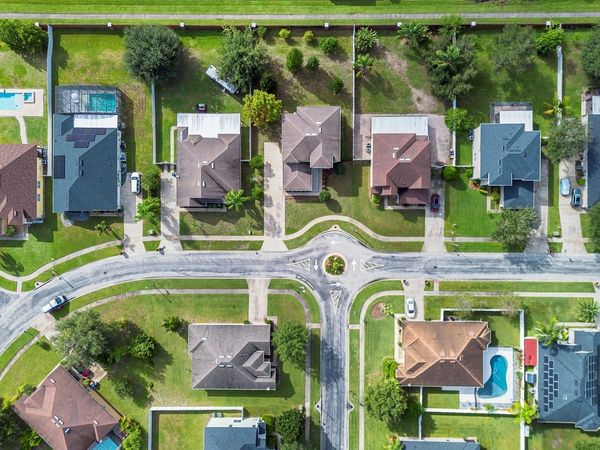
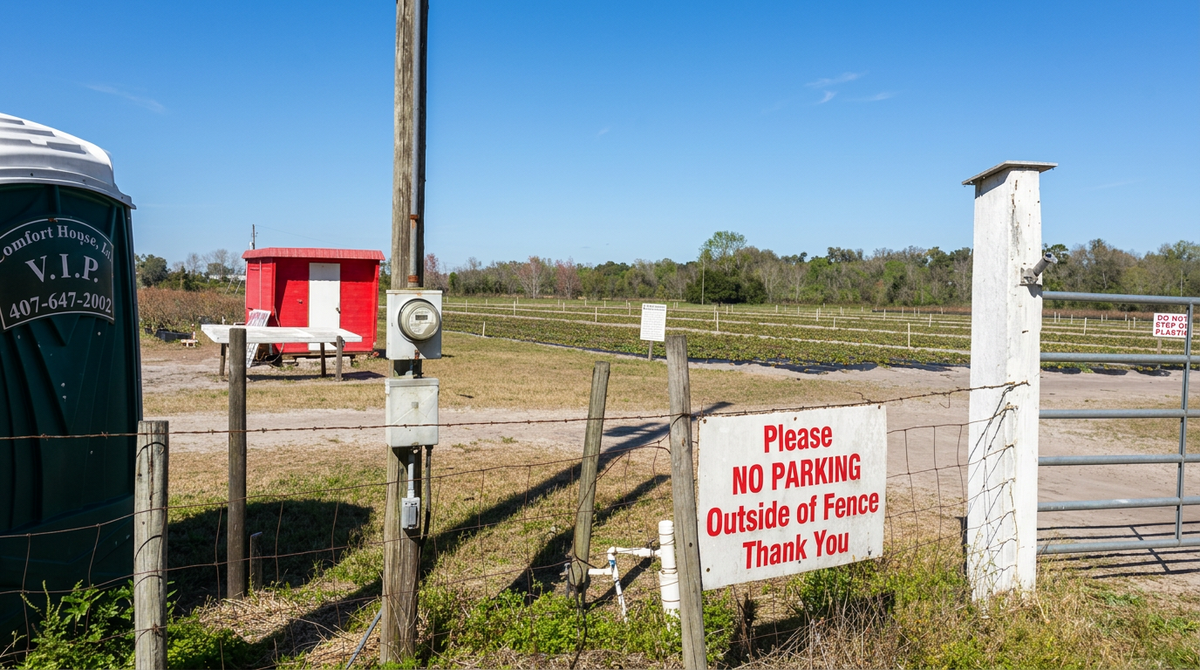
The property at the center of the Oviedo piece of this fight is Pappy's Patch, the you-pick strawberry farm in the Black Hammock. Take a look for yourself before picturing 81 homes on it.
Open the 360° view of the land.
Why it matters here
Whatever one thinks of the constitutional argument, the stakes are clear on both sides. Supporters of the boundary see a line that only works if it holds; supporters of a change see landowners carrying a public cost alone. The statewide route that could have settled it for everyone at once is closed for now — which means the next real decision is a local one, made by commissioners our neighbors elect, on a specific piece of the Black Hammock.
Oviedo and Winter Springs neighbors: should the rural boundary stay a matter for local voters and their commissioners to decide, or do the property-rights concerns the attorney general raised deserve a statewide fix? We'd like to hear where you land.
Reporting compiled by I Love Oviedo Winter Springs, drawing on public records and the original reporting of Oviedo Community News. Official documents — the attorney general's opinion, the county's response letter, the text of SB 208, and the county staff report on the Valhalla Harvest Market request are available upon request.